
The 2025 Goaties
2025 was a wild year for games: some spectacular highs, disappointing lows, and a continued tire-fire of an industry with seemingly no end in sight.
I played and finished more games this year than I think I have in a very long time, which speaks both to the overall quality and consistency of 2025’s releases, and more specifically to the Very Healthy, Good State of Mind I’ve been in all year long. It also felt like 2025 embraced the idea of shorter, tighter games. I saw credits on more games in part because I didn’t feel like I had to putter around for a hundred hours in any given title. That might be me being more selective of what I spend time with, and it’s probably not hurting that I more or less dropped off of Destiny 2 in its entirety this year.
The list is here in full this time around, along with everything I beat (and played) throughout all of 2025.
2025 Games I Played At Least 30 Minutes Of:
Monster Train 2
Nordhold
Elden Ring: Nightreign
Rift of the Necrodancer
FBC Firebreak
Peak
THPS 3+4
A Solitaire Mystery
The King is Watching
He is Coming
Deep Rock Galactic: Survivor
Ninja Gaiden 4
Halls of Torment
Two Point Museum
Baby Steps
Hell is Us
Games I Was/Am Interested In,
but Didn’t Get To:Split/Fiction
Wanderstop
Citizen Sleeper 2
Sunderfolk
Moonlighter 2
Cronos
Is This Seat Taken?
Dispatch
Ambrosia Sky
Completed:
Eternal Strands
Avowed
Blue Prince
Expedition 33
Doom: The Dark Ages
To a T
Revenge of the Savage Planet
Skin Deep
Lost in Random: The Eternal Die
The Alters
Destiny 2: The Edge of Fate
Wheel World
South of Midnight
Promise Mascot Agency
Hollow Knight: Silksong
Silent Hill f
BALL x PIT
Keeper
Strange Jigsaws
Outer Worlds 2
Destiny 2: Renegades
The Seance of Blake Manor
Lumines Arise
Routine
Once Upon a Katamari
Non-2025 Game Completions:
Crash Team Racing: Nitro-Fueled
Dishonored
Metaphor Re:Fantazio
Gears of War: Ultimate Edition
Spyro Reignited Trilogy
Gears of War 2
Gears of War 3
#10 - Promise Mascot Agency

After the absolute stunner that was 2022’s Paradise Killer, I was ready for just about anything that Kaizen Game Works was willing to put out. When they landed on “pseudo-open world collectathon meets management sim meets card battler meets visual novel with a yakuza and mascot tilt,” I…was confused but far from apprehensive.
The actual Game part of this wears a little thin at times, as the island’s maybe a skosh too big for how much you have to traverse it to get all the collectibles, but sticking to the critical path almost certainly alleviates that pain point. Meeting all the mascots, digging into the narrative of this island the main character’s been exiled to, getting a feel for how your weird flying Kei truck operates: that’s the sauce that makes PMA soar.
The cast is delightful, and wildly varied in their ambitions. I went from being routinely annoyed by your main sidekick Pinky to actually ending up pretty fond of the little psychopath. It’s a story about found family, grappling with one’s past, and learning to take ownership of your future.
#9: To a T
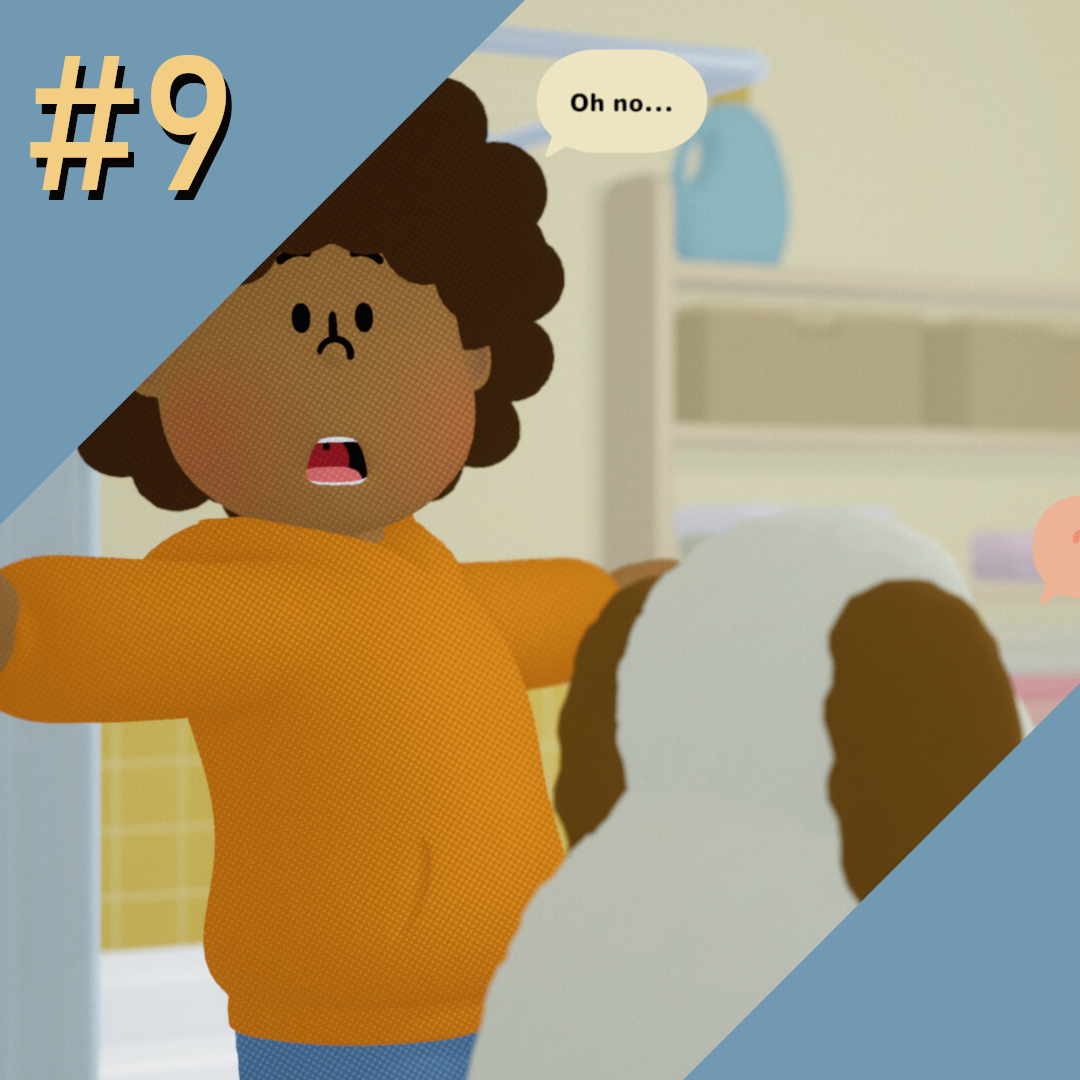
Keita Takahashi should be able to do whatever he wants, whenever he wants, with as much money, time, and staffing as he needs to get it made.
To a T takes the idea of “episodic” gaming in a very different direction from the Telltale-style approach, steering it closer to actual 20-40 minute chapters, complete with intro/outro credit sequences. You play a teenager stuck in a T-pose, navigating the world with complications you’d expect and some you wouldn’t. The story gets appropriately weird, but never strays too far from the thesis of its impossibly catchy theme song: “Believe in yourself, you’re the perfect shape.”
There are moments where To a T feels less like a capital-G “Game” and more like a toy, but what a creative, uplifting toy it is. Each episode takes an idea and runs with it for about as long as it needs to, and I never felt like I was wanting for more from a given mechanic/gimmick. Hearing that it hasn’t sold particularly well is heartbreaking, because it’s such a distinct piece of entertainment that we very rarely get.
#8: The Seance of Blake Manor
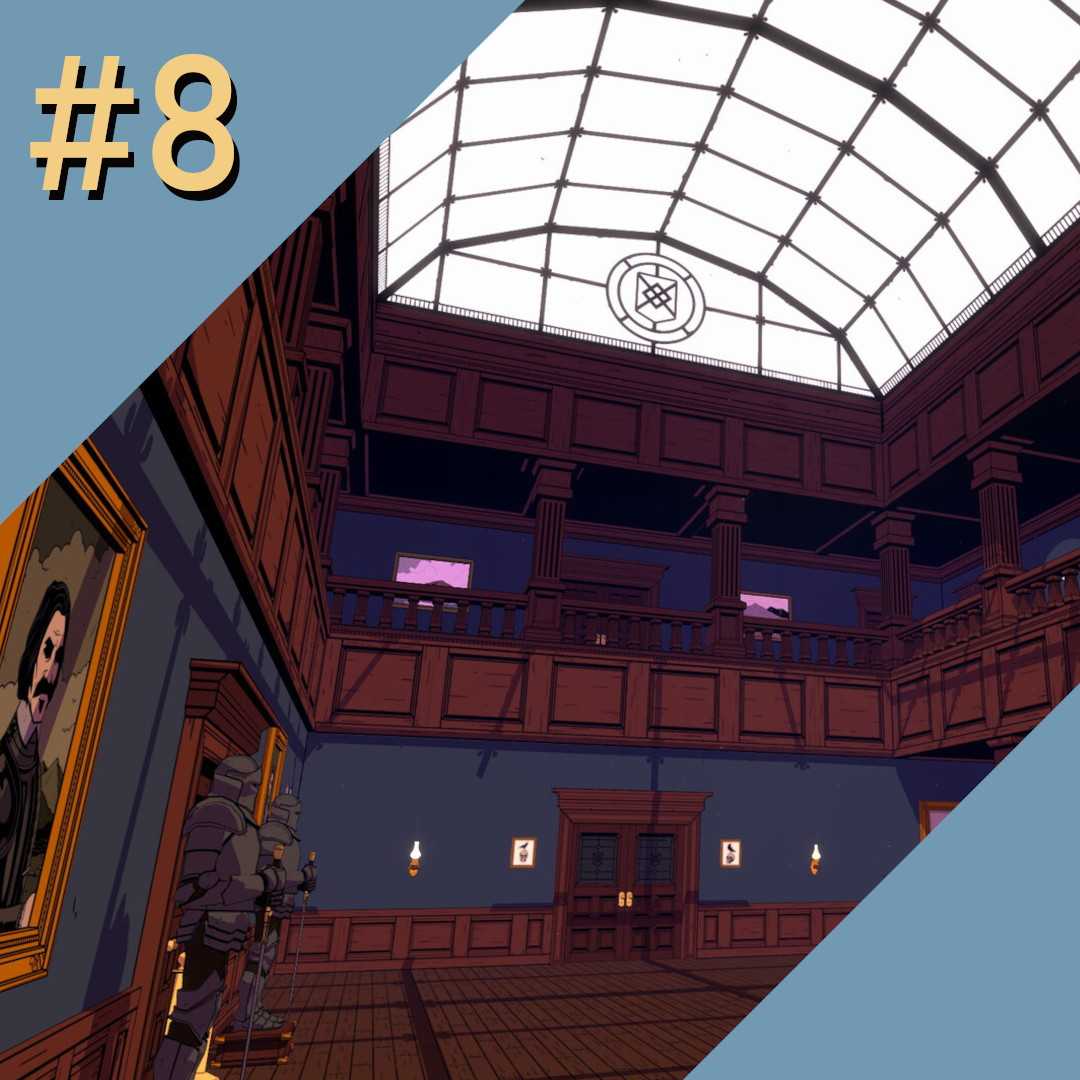
Blake Manor is one of the most recent 2025 games I completed this year, but good grief, did it leave an impression on me. From the striking, Mignola-esque art direction, to the uncommon setting (1890s, pagan-and-folklore-drenched Ireland? C’mon! How many other games can you think of that come even close to that vibe? It’s so cool, and represented in a way that feels genuine and respectful.), to the way the narrative introduces twenty-five characters in the span of a few minutes and makes that seem entirely reasonable, The Seance of Blake Manor is a detective mystery that’s as much about solving the Central Question as it is learning about its cast of characters and the tangled web that’s brought them to the titular manor. Like a couple of other games on this list, Seance feels like it has a good deal to say about grief, as much of the cast is attending this event for deeply personal reasons.
There are some genuinely exciting twists, a slow-but-steady drip of eureka moments, and a critically helpful “Mind Map” that helps you keep track of the hundreds of clues you’re going to find as you peek and prod your way through the manor. It’s also a game with an extremely prominent ticking clock element, presented in a way where it feels like you’re up against the wall all the time, but - minor spoiler here - you’re probably fine, don’t stress about it too much.
#7 - Avowed
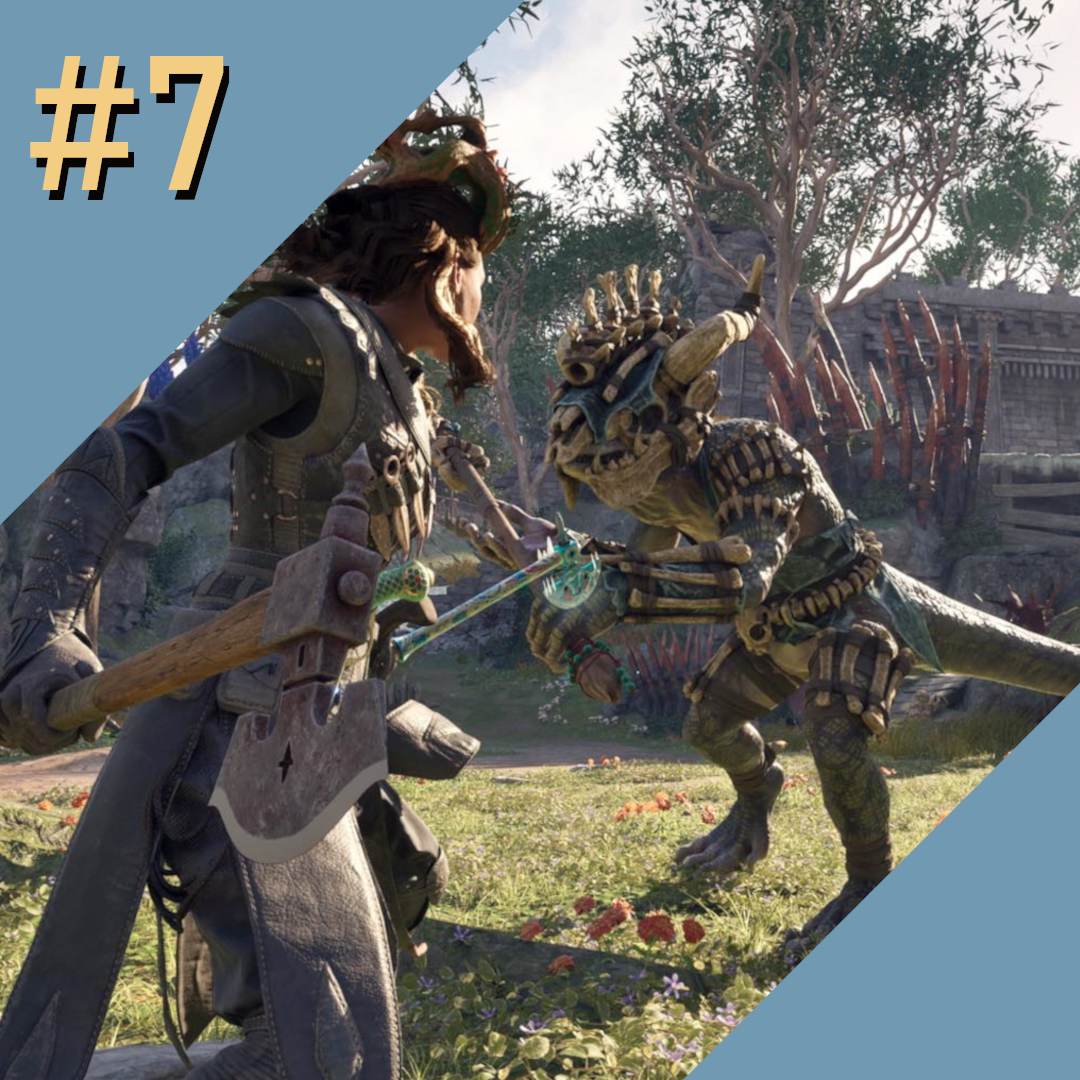
Hey, Avowed, right? For a game that came out all the way back in…February, he said without actually checking, I kept thinking about this new approach to Obsidian’s Pillars of Eternity universe as the year went on. It’s the better of the two 2025 Obsidian Bethesda-style RPGs, for starters, and it’s one of the better games in this style I’ve played in…maybe ever?
From the jump, Avowed asks interesting questions about the nature of Empire as a force for change, sticking you in the shoes of an Envoy who’s as in over their head as they are fated to show up on the Living Lands. Combat is fluid, the world is so weird and filled-to-bursting with pretty dynamic characters, and I appreciate the demonstrable impact of several big choices throughout the game’s narrative. Finding a secret cave full of ne’er-do-wells that ended up having a noticeable impact on a Big Story Beat five or six hours later? That’s good stuff, and it gets bonus points for being one of a myriad instances of “Stuff Hidden Behind A Waterfall,” the objective best metric for whether or not an open world is Cool or not.
On that note, in comparison to The Outer Worlds 2, Avowed’s open world feels so much denser in terms of what it has going on. I hit a point by the second map with OW2 where I was just kind of…done with hunting and poking around? But Avowed constantly breadcrumbs and nods towards cool little discoveries, encouraging you to spend more time feeling immersed and invested in this space.
If nothing else, Avowed made me terribly interested in checking out the core Pillars of Eternity games and seeing what else has gone on in the world of Eora.
#6 - Keeper
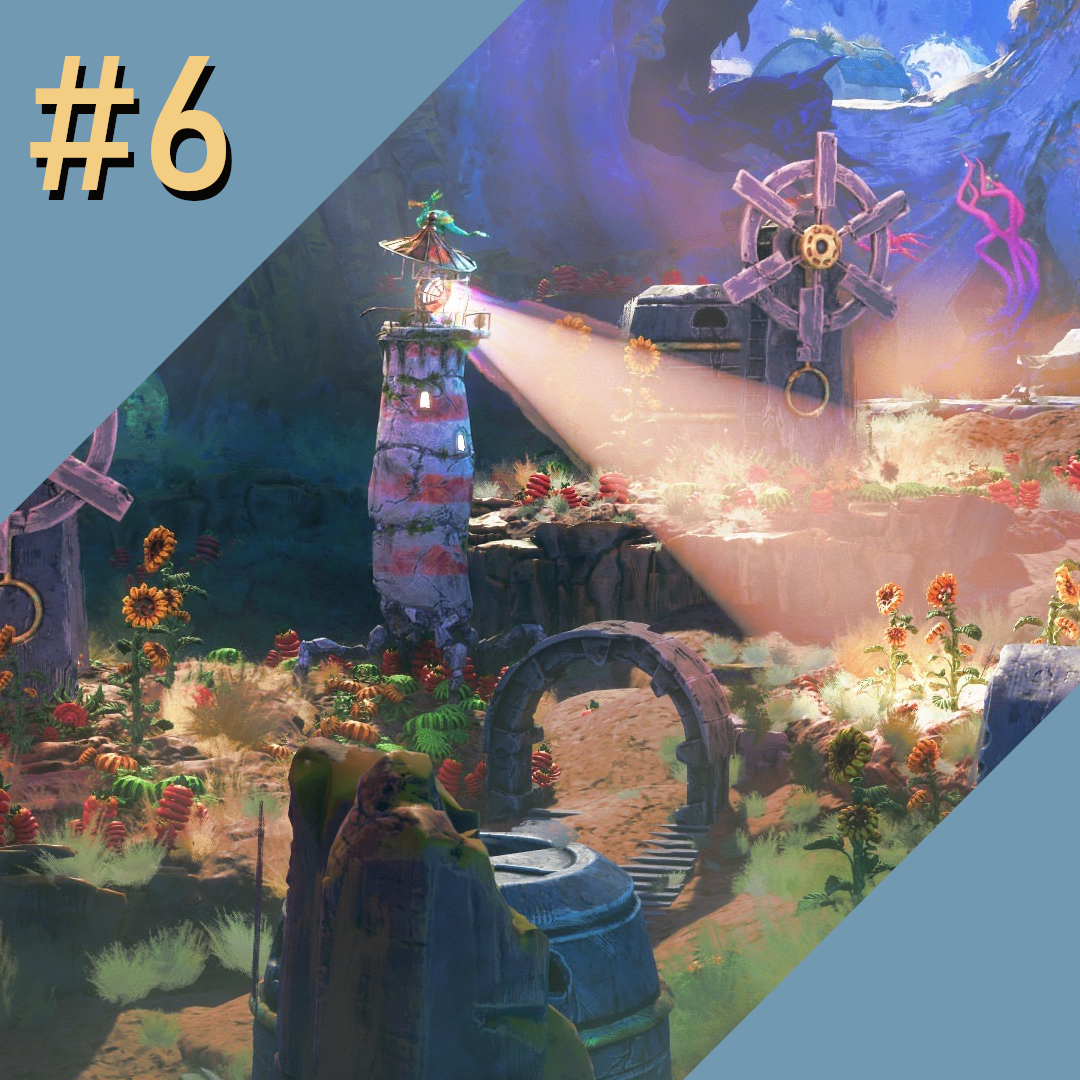
Keeper’s one of those games I think I could recommend to just about anyone who wants to see something that’s simultaneously A Video Game-Ass Video Game and An Incredible Vibe Check. I don’t know that I have a terrible amount to say about it.
It’s a wordless game about a sentient lighthouse and its big bird friend. Despite the complete absence of any spoken language, I feel like I could tell you the majority of the plot even now, months after playing it in one marathon setting. (There’s some plot establishment that happens in the achievements, but most of those are squirreled away behind hidden statues.) Every single scene looks like cover art for the sickest progressive rock album you’ve never heard of, and each chapter feels razor-sharp in terms of its pacing and flow, ensuring that any given gimmick/mechanic/style of puzzle doesn’t outlive its welcome. Act 2 felt like it went on just a smidge too long, but the balls-out weirdness of the game’s final hour more than makes up for that.
It’s been quite a while since we’ve had something new from Double Fine, and Keeper is immediately near the top of their impressive and established catalogue.
#5 - Silent Hill f
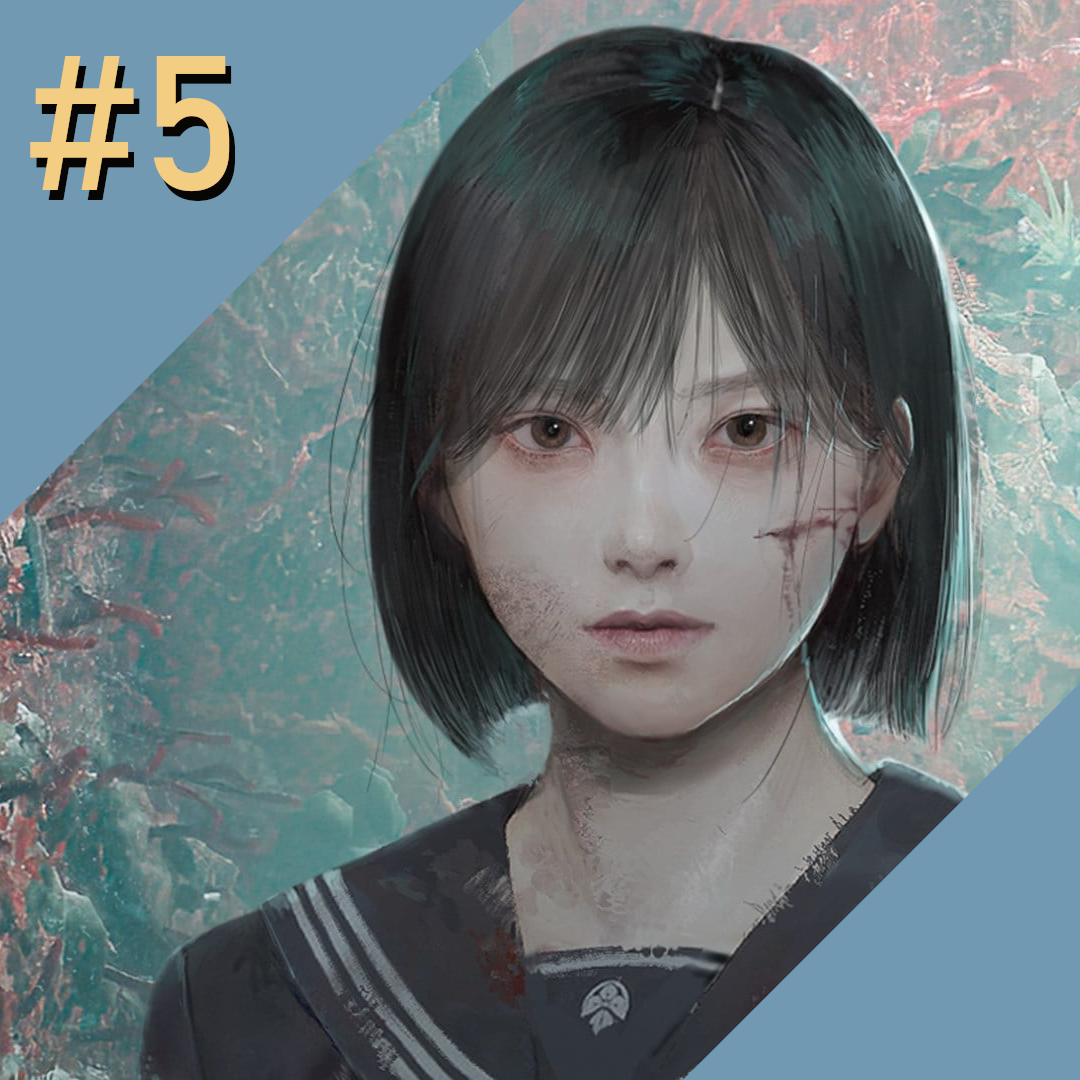
Before 2025, I'd never played a Silent Hill game. Anything I'd known about it came from cultural osmosis and four or five episodes of Run for the Hills on Giant Bomb: the dog house and Pyramid Head, sad dudes and dead(?) wives. When Konami announced three new games alongside the remake of SH2, I was curious, and then the weird FMV/livestream-driven thing happened and I lost interest entirely.
Imagine my surprise when I pick up Silent Hill f for October and find a considerate, focused, and deeply upsetting horror landmark. Everything about SHf’s construction feels like a scalpel where a hammer would do, from its distinct setting and tone, to the back-and-forth nature of the two worlds protagonist Hinako suffers through. Its full narrative doesn't quite come together until you've played through it a few times, leaving enough to the imagination that I felt a little blindsided by the time credits rolled the first time. Though those secondary/tertiary playthroughs do skip over some of the most tedious (and most viscerally upsetting) bits, I don't know that I necessarily needed to play through it four and a half times to see all the endings.
I don't often get to the end of a new game and wonder if I've been missing out on a franchise for the better part of 20 years, but I may very well be looking at that SH2 remake come October of 2026.
#4 - Skin Deep
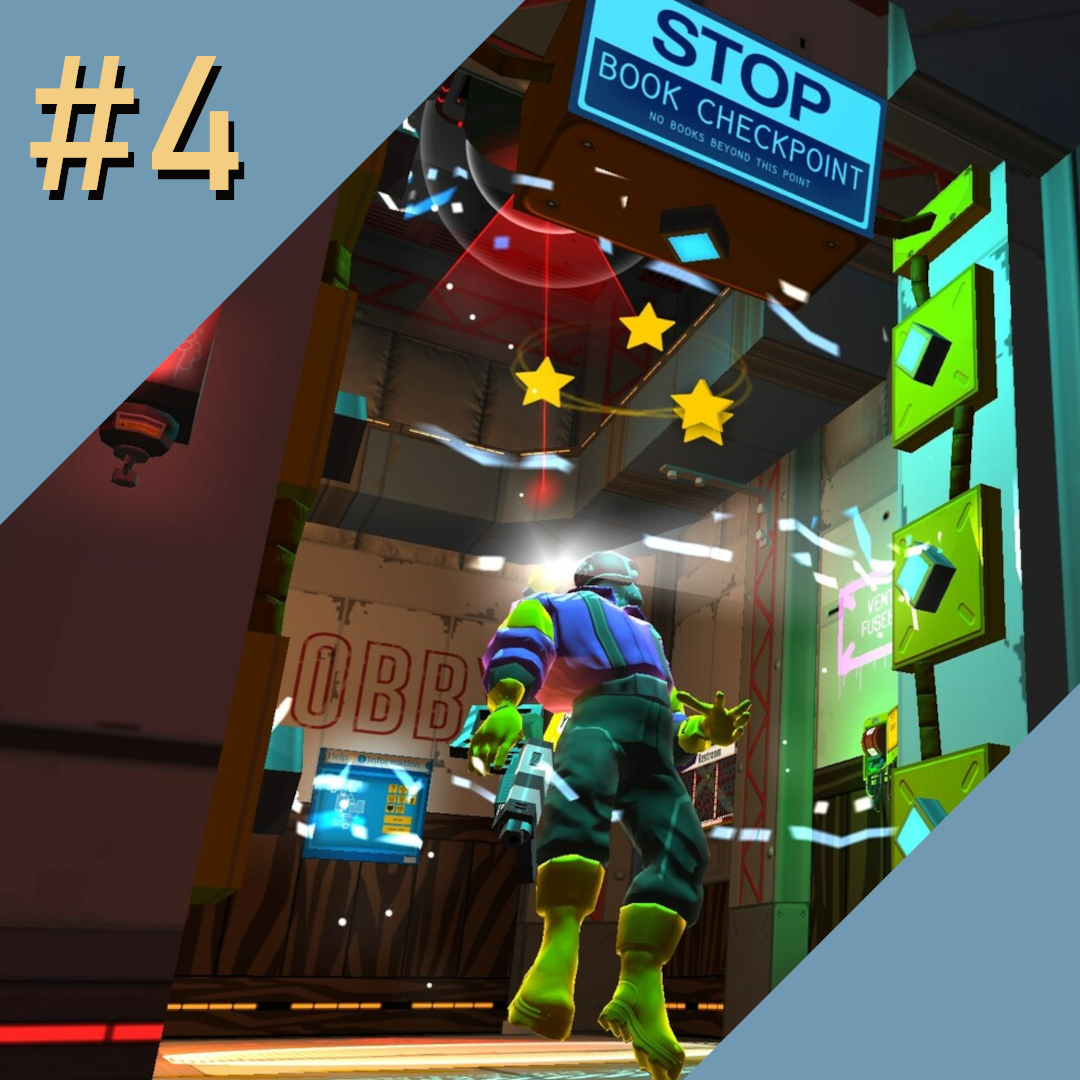
I am trash-ass awful at “immersive sims,” the decreasingly-niche genre where you're plopped down in a clockwork world, and learning the ways in which it operates is as much of the game as it is learning to break those same rules. I like to call them “dude-pile” games: think Hitman, Dishonored, Deus Ex, games that make you feel like a Turbo Genius as often as they do punish you for not learning the rules and stepping out of stealth, and there's another guard there for some goddam reason, I could've sworn I knew where a-
Skin Deep takes both the occasional frustrations and the frequent moments of elation and cranks all of it up into farcical territory. The end product is a masterstroke of level design and consistently engaging puzzle spaces. The giant, heaving maps of the genre are eschewed for tight, densely interconnected spaceships, full-to-bursting with bumbling-but-accurate guards and spacefaring cats in cages. You'll crawl through vents, manage security cameras and turrets, and rip heads off the aforementioned guards only to throw them down garbage chutes to prevent their narratively-justified respawn. The narrative's goofy as hell, and the story-focused interstitials play with framing and jump cuts in ways that we should be doing across the entire medium.
Skin Deep manages an almost perfect length in its campaign. Every level teaches you a new trick or two, building on itself until it doesn't feel like there's much else they need to teach you about how their little clockwork spaceships work. More importantly, by the time you're done with a given level, having spaced all the grunts and saved all the cats, it feels like you have a thorough understanding of that level. There's something to be said about Hitman's sprawling labyrinths and the depth to which you can master its systems, but Skin Deep always feels like it knows exactly how much game you need.
#3 - Hollow Knight: Silksong
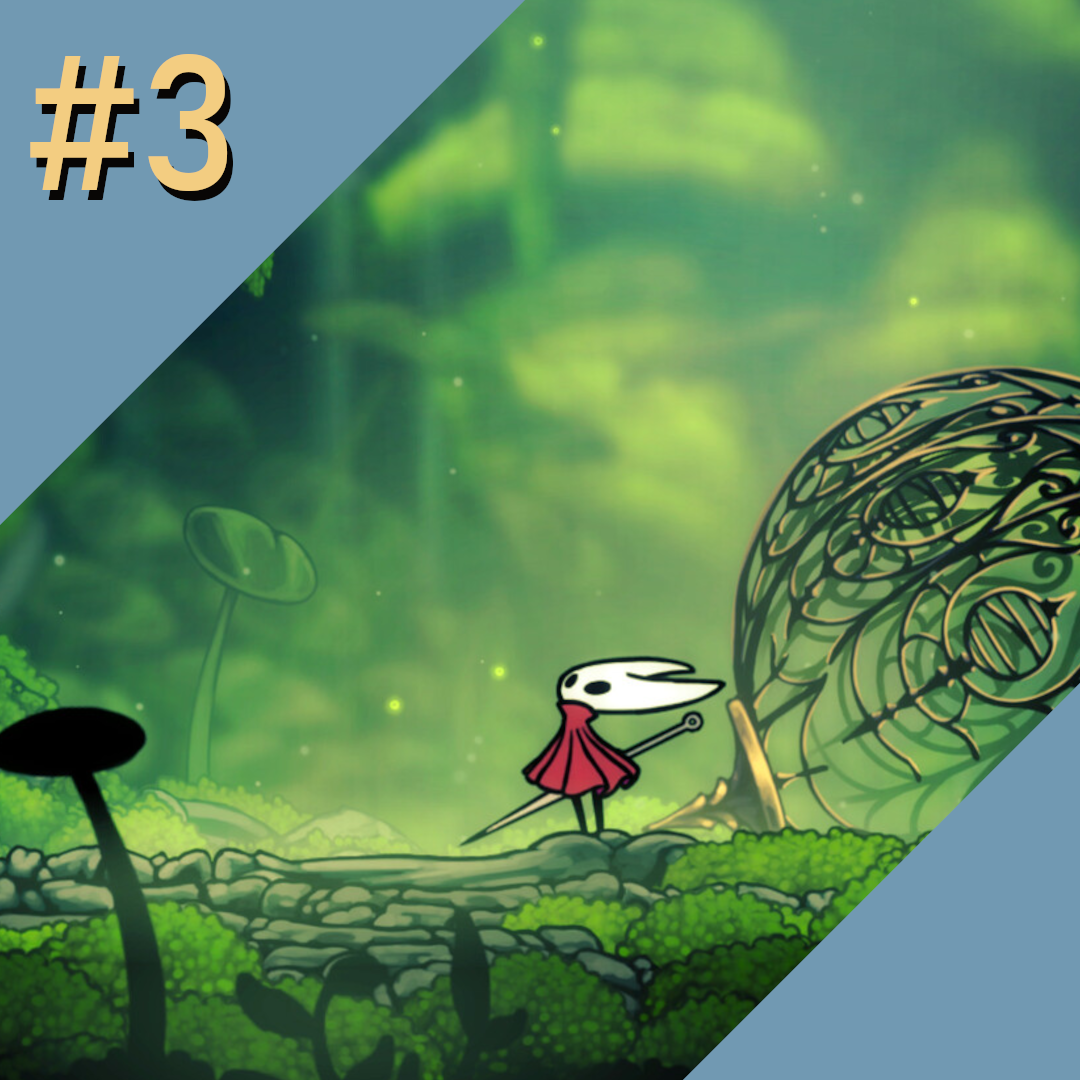
I stayed away from the original Hollow Knight on its initial release, muttering my way through Hallownest over a livestream. It’s a tremendous game, but it didn’t necessarily…linger with me in the way it very clearly has with a lot of folks across the Internet. As a result, I didn’t find myself caught up in the prolonged, likely-exhausting, ever-more-heartbreaking wait for any news on the DLC-turned-full-sequel Silksong. When it did finally drop earlier this year, I hopped in without the expectations that people had attached to it.
Good grief, what an adventure. Silksong sticks the landing on such an exhilarating, almost comedically-big jaunt through another open world/search-action/Metroidvania there I said it, but I think there are a handful of things that elevate it into that topmost pantheon of the genre. The core changes they make to the systems that require some level of unlearning from the original Hollow Knight are all smart ways to increase the combat’s pace and freneticism. The world just keeps getting bigger, to the point where over 45 hours in, I still found myself stumbling into entire new zones that ate up a couple of hours.
The thing, weirdly enough, that stuck with me the most? Silksong’s narrative, which is as much about grief and found family as it is about motherhood, propels protagonist Hornet forward, chipping away at the emotional walls she’s built as she makes her climb. There’s a lot of subtle characterization in the writing, and it all works so well.
Silksong is abso-lutely one of those games where you probably already know if you want to play it or not. I don’t think it’s doing anything particularly flashy or dazzling mechanically, but it nails all the beats that genre die-hards are all deeply familiar with.
Also Sherma’s there. Sherma’s great.
#2 - Clair Obscur: Expedition 33
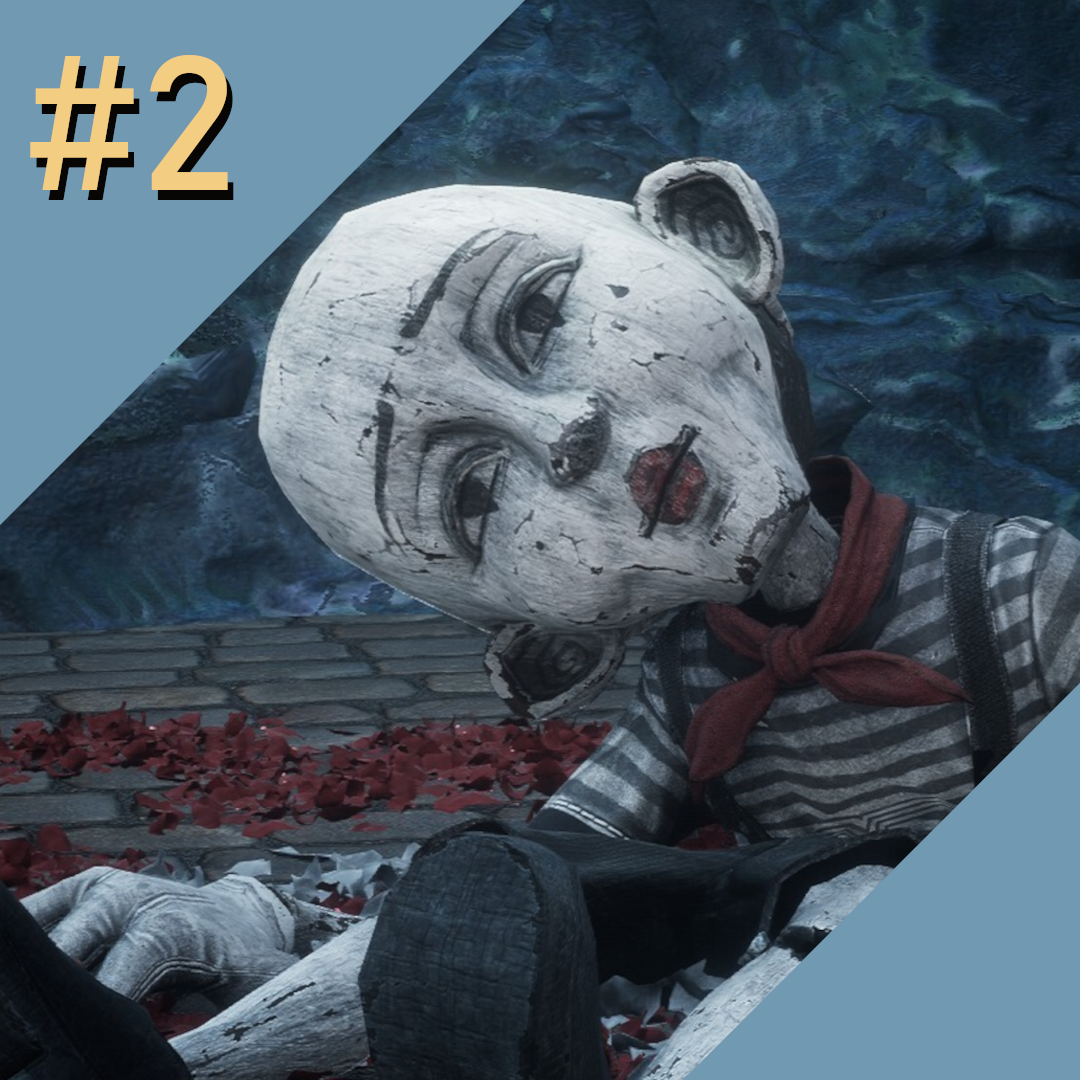
There’s a thematic undercurrent to a lot of the games on this list, and a lot of the “Big” games in 2025 across the board: grief, and navigating it. It feels natural, both in terms of where we are as a society and where we are, five years after the worst of the pandemic.
Clair Obscur: Expedition 33 is as much reflecting on that period of time as it is trying to come to grips with the fragility and transient nature of whatever it is we’re doing here on Earth. In a world where a giantess sorcerer called the Paintress is slowly but surely whittling away the population based on a brutally decreasing threshold, the last standing city sends out expeditions of pseudo-magical soldiers to try and hunt her down.
What follows is an RPG with splashes of Paper Mario/Lost Odyssey-style reactive combat, a wildly inventive and colorful world, and the best ensemble cast of the year. Their trials in the overarching narrative are solid, with big swings that got a couple genuine gasps out of me (that Act 1 climax, huh?). It’s the smaller, more introspective beats at the camp that feel like they get at the actual beating heart of the story. The party’s cast is full of wounded, flawed, and deeply personable individuals, and I loved getting to know more about them, to peel back the layers that brought them onto the expedition and into the depths of the wild frontier.
Expedition 33 manages an incredible brevity, not only in its critical path, but in its overall world and level design. I can’t think of a single area or sequence that felt like it dragged, and a full 100% completion run took me just under 60 hours. Comparing that to last year’s Metaphor re:Fantazio, another incredible RPG with a final runtime nearly twice as long (and most of that consisting of grinding in the game’s final act), it’s impressive that E33 manages so much in comparatively little time.
For a game that I installed with no expectations and, honestly, a little bit of a stuck-up nose about it, I really think this is one of those breakthrough RPGs that appeals to and resonates with an audience beyond the extant legions waiting for another Persona or “traditional” Final Fantasy. The combat requires your attention, the characters are incredibly well-realized, the soundtrack’s wild, and the story takes big swings without being afraid to beat the everloving hell out of its characters.
The stuff about the AI slop that was patched out still sucks. I don’t want to diminish that or try and sidestep it. It sucks hard, but as far as I could tell, Sandfall seems like they’re earnestly in the camp of “we tried it, we know it sucks, we’re not going back to it.” Hopefully there’s truth in that.
2025’s Best Game: Blue Prince
Okay. SO.
Just about every year, if I’m lucky, an independent studio releases what I like to call the “Dylan Sicko Game.” The criteria for what makes something a DSG is fairly straightforward:
It takes over my brain for anywhere from two weeks to the better part of eight years.
It requires some amount of note-keeping/journaling.
It has some level of puzzling at its heart, whether that’s ambient “figure out what’s going on in the world” or a lot of little, discrete puzzle moments.
It will, almost inevitably, be either my favorite game of that year, or damn close to it.
Previous games in the Sicko Hall of Fame include last year’s Animal Well and Lorelei and the Laser Eyes (we got two in 2024! wow!), Return of the Obra Dinn, FEZ, The Witness, the incomparable Outer Wilds, and to a lesser extent, things like Strange Jigsaws and FRACT OSC.
Blue Prince is the closest to Outer Wilds I think I’ve felt with regard to its constant, underlying presence in my brain. The manner in which its layers are uncovered feel baked into the very foundation, as there’s always one more puzzle, one more thing to think about, one more mystery you haven’t fully wrapped your head around. The entire premise of the game feels like a tutorial to get you to The Real Shit, where an ever-maddening spiral will encourage you to just make one more run, to piece one more thing together.
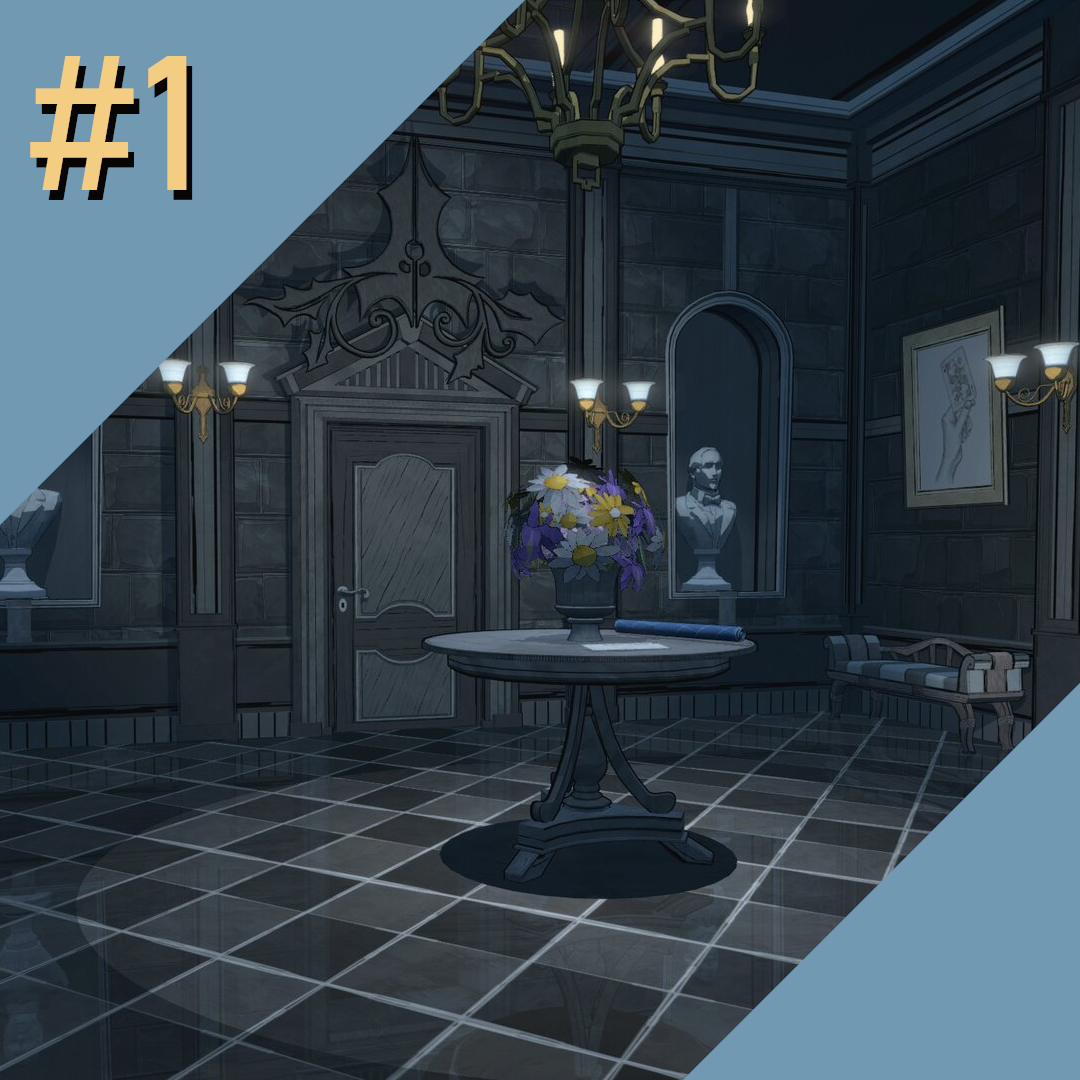
For the uninitiated, Blue Prince puts you in the shoes of a young boy whose great uncle has recently died, potentially leaving him with the sprawling Mount Holly Estate, under the condition that he finds the 46th room in…a 45-room mansion. It's a roguelike puzzler that’s a bit of a deck-builder that’s also a mystery game. At the start of each run/“day,” you'll be outside the manor with a set number of steps, that more or less correspond to how many times you can cross a threshold into a different room/area of the surrounding estate. Oh, and - this is important - the layout of the mansion isn’t set in stone, it changes each day, and you’re the one manipulating said layout as you move from room to room.
Blue Prince is as much about learning how to play the game as it is finding ways to break it wide open, and every step of that process feels creative and satisfying. The initial days where your available steps are low make every discovery feel important, and every weird little quirk in the mansion is worth noting, tracking, keeping one eye on. The “mid-game” of that search for Room 46 is a constant drip feed of steady mental progress, as the player pieces together not only how the logic of the room placement works, but how to work around it and manipulate the very explicitly named “Room Deck” in their favor. By the time you do reach Room 46, your mind and notebook are both left with a myriad list of “Hey, what’s going on here” questions, and that’s honestly where the game began in earnest for me. I reached what the game pitches as the “ending” around my 40th run, and proceeded to spend another hundred runs uncovering layer after layer of mystery, finding new rooms, and scribbling down page after page of notes, observations, and symbology that would likely cause someone with no context to be Genuinely Concerned About Me.
Make no mistake, I think getting to 46 and seeing credits is a completely valid way to experience and be done with Blue Prince, but there’s so much more underneath the surface of that initial process. Night after night, I had profound eureka moments for puzzle after puzzle, and more often than not, those solutions were met with even more things to pick at and pick apart. The spiral, that persistent mental Unraveling™, is such a potent and powerful source of engagement for me, and the fact that Blue Prince manages to have multiple avenues to discovering most of those solutions speaks to the intense consideration with which it’s been built.
It is not a perfect game, and I think some of the criticisms levied at it are, honestly, valid. The roguelike nature is sometimes a bit frustrating to push through, and some of the deepest puzzles require a spectacular confluence of very specific things to line up, to their detriment. Even with those problems, there’s nothing like Blue Prince, and I don’t think there will be anything else that’s as consistent and thoroughly mystifying in this particular fashion for a very long time.
If any of the games mentioned earlier have been on your radar, whether from your own engagement or me relentlessly yelling about them, Blue Prince will delight and baffle you to no end.
The spiral never ends.
That was 2025! We’re only two days in (at time of writing) and I already feel like I may have missed out on at least one top 10-worthy game as I slowly but surely trudge through the bizarre landscape of Baby Steps, but that’s why we have “Best Game From Last Year”-style awards.
Until 2026’s Goaties!