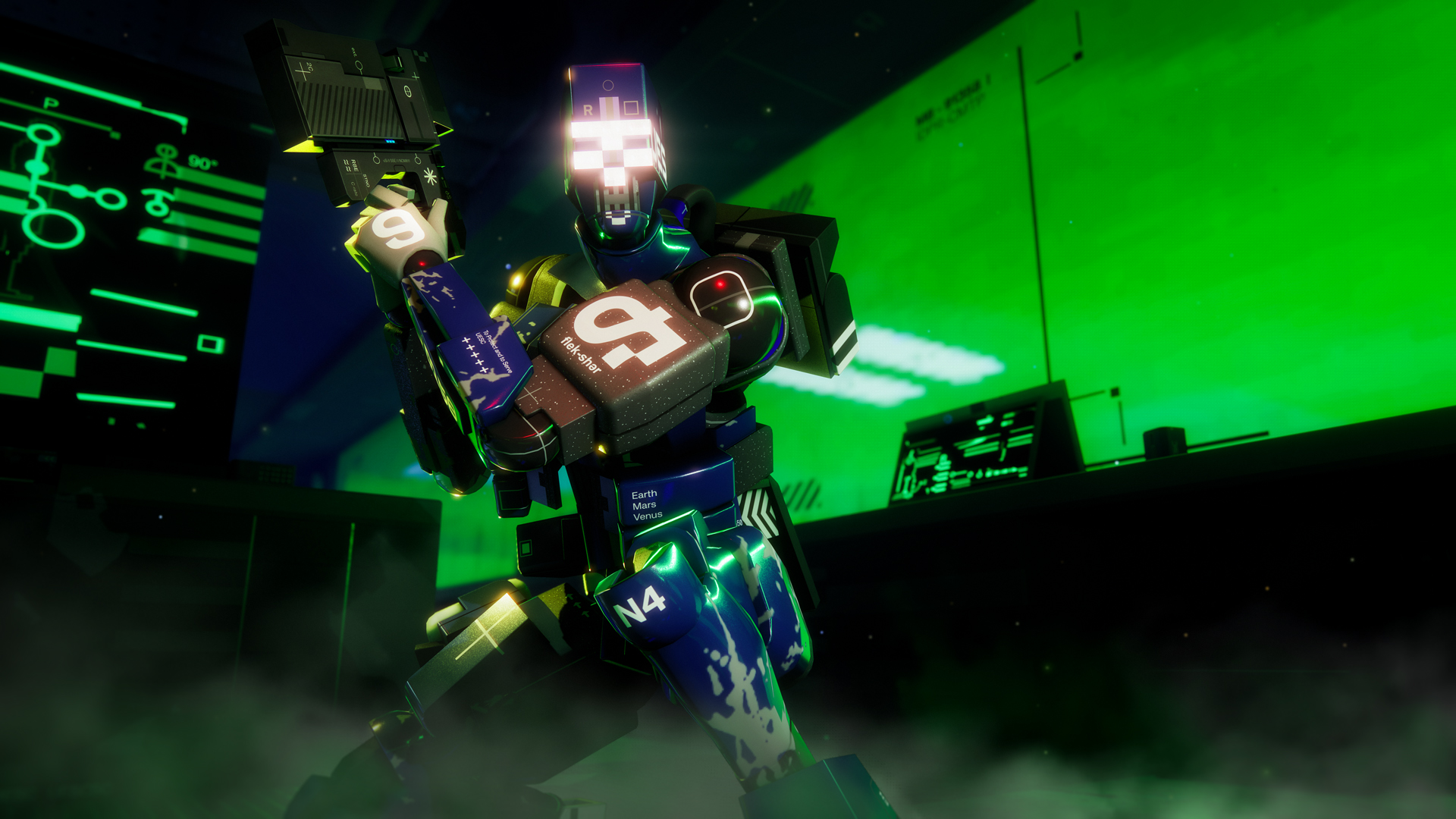
Marathon
I thought Marathon would make me angry.
Some part of me expected that the core loop of an extraction shooter (spawn in, grab whatever’s not bolted to the ground, and hope to survive long enough to get back out, turning your spoils into meta-progression until you do, inevitably, bite the pavement) would be miserable in practice, despite the pedigree of Bungie’s commitment to gunplay and general aesthetics. I had some preconceived notion that, despite appreciating the hostile and disarming tone of the alien world of Tau Ceti IV, there wouldn’t be enough of an actual narrative pull for me to want to engage with beyond the stuttering, session-based gameplay. Even knowing that extraction shooters are just a riff on battle royales, a genre I have enjoyed in the past, I was ready to write this off as “the game that broke my love for Bungie.”
After more than eighty hours and a handful of hilariously ineffective delves into the game’s first “endgame” map, I can say with some confidence that Marathon does make me angry.
It makes me angry that it is, without a doubt, the most enraptured I’ve been with a multiplayer game in almost a decade.
I’ve been having a tough time trying to pin down just what it is about Marathon that has so deeply entrenched itself in my brain over the last two weeks. Every time I point to a specific thing, it falls short of describing the intoxication that a good session elicits.
The gunplay is outstanding, with guns that feel as crunchy as they sound, and a variety of distinct, powerful character classes, called Shells. Marathon’s narrative, told through the lens of the six megacorporations you run endless contract work for, is unsettling, parseable, and ultimately ignorable if you just want that core loop. The steady drip of new [guns/gun mods/implants/equipment], whether from a run itself or your progression through the ranks of these factions, manages to make the fear of Losing Your Stuff™ far less paralyzing. The soundtrack is an eerie blend of ambient electronic music and haunting distortion, setting itself at odds with the more traditional orchestration we’ve had in Destiny for over a decade. These pieces are all core components of what makes dropping into Tau Ceti IV engaging, but they’re not the thumping, roiling heartbeat that brings me back, time and time and coolant-fueled time again.
Marathon, at its heart, is two things: a Memory Generator for Sickos, and a mortifying horror game.
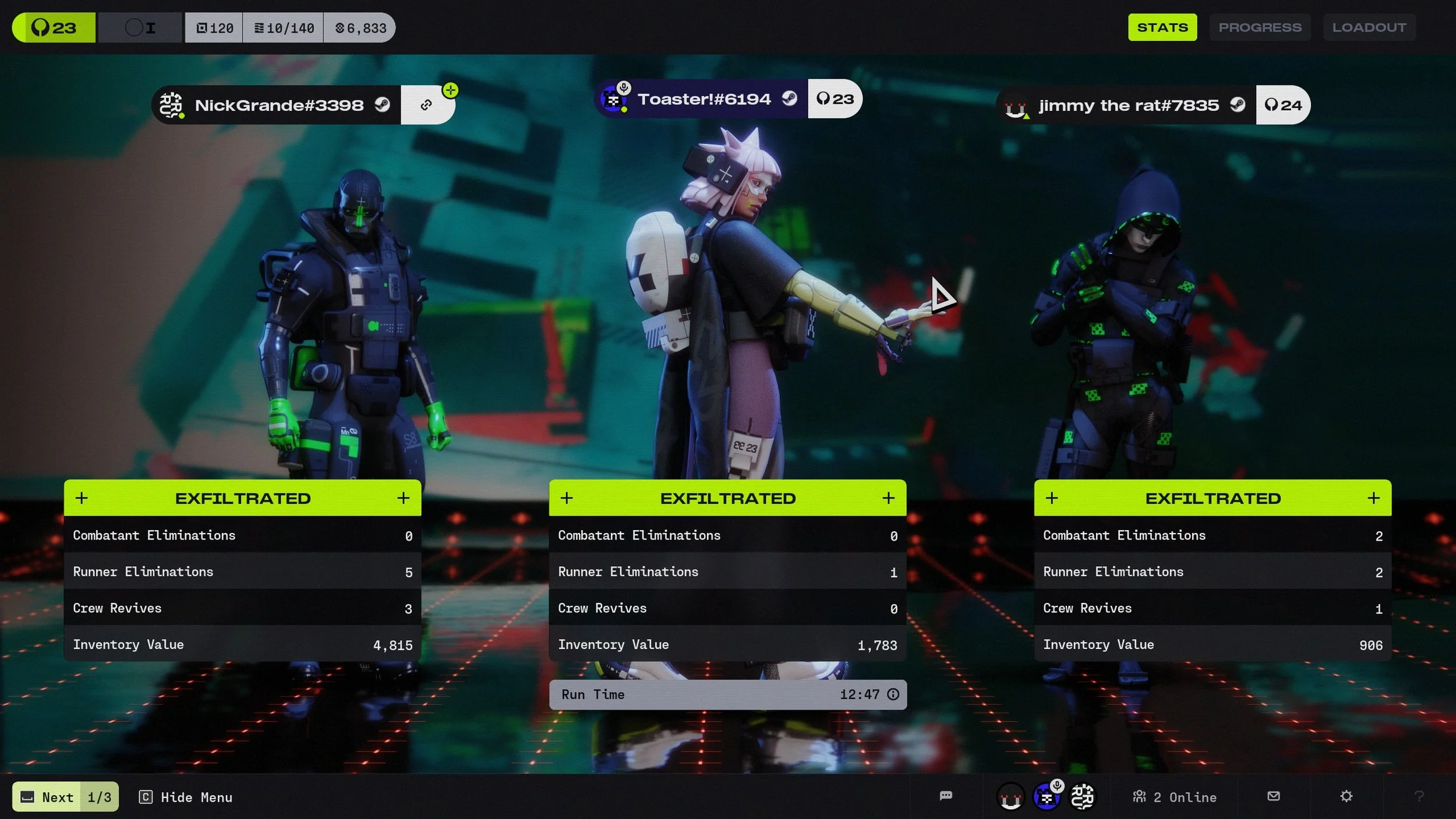
This exfiltration was hard-earned by NickGrande, who single-handedly saved us from two squads with a shotgun, a corner, and a dream.
If Marathon was simply a very good shooter, with a handful of “open zone”-like maps peppered with Points of Interest that serve as smaller-scale deathmatch killing fields, I would still recommend trying it. If there was no real narrative beyond the straightforward pitch of “hey, this planet’s kinda messed up, and these people are out to get your stuff, take theirs instead,” I might still recommend it. What really drives me to keep climbing, crawling, and killing my way through these matches is the anecdotes, the “did we really just do that?” moments that feel etched into the surface of Marathon’s operating philosophy.
Multiplayer games feel like they’re at their best when they give players opportunities to reflect on the session. The shared or related experience of a solved puzzle, stealthy flank, or brutal combat mistake feels critical to a game’s virality these days, for better or worse, and every bit of Marathon’s map design feels driven to delivering those experiences. The three non-endgame zones on offer with the game’s initial season are deceptively small, littered with patrolling NPC robots from the United Earth Security Council that are solely there to make your life miserable. Compounding the stress of navigating these worlds: more often than not, a match will throw you into the thick of one or more firefights with another player or full squad.
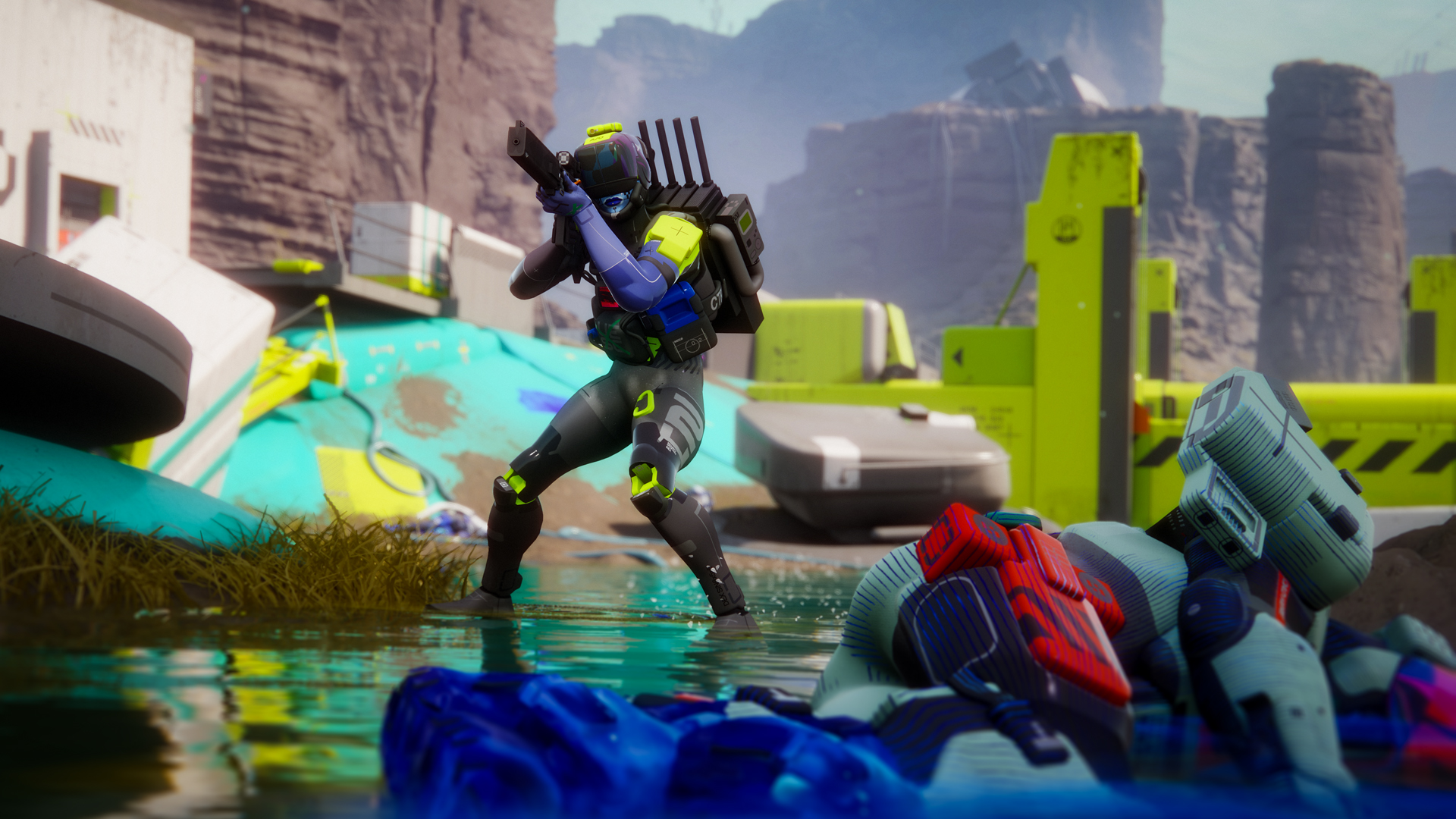
Combat in Marathon is stressful, filled with the harsh punctuation of pixelated UI skulls and the harsh “ch-thunk” of your body hitting the ground. Full squad fights have the capacity to move and breathe over time, with deaths leading into revives into tactical retreats and routs. Sure, sometimes it’s six people blasting shotguns in a garage, but as time goes on, it feels like any given combat encounter has texture through cover, hallways, open fields, and high ground. The time-to-kill is often very short, but watching one of your teammates suddenly fall as a sniper rifle screams out in the distance doesn’t necessarily mean the end of the run. Being the person holding the sniper rifle feels incredible; being the teammate is, often enough, still kinda funny.
Marathon’s “standard” mode of three-person squads is thrilling, encouraging communication, patience, and a willingness to know when to get out. It feels fantastic to find your team’s groove, internalize the best approaches to the POI killing fields, and synergize your class kits. Completing your contracts in Squad mode gives bonus experience and faction reputation to the entire team, which encourages you to work together and actually give a damn about what your teammates are trying to accomplish. Squad mode feels deeply informed by the highs and lows of playing in a Destiny fireteam, with a ton of care given to making it feel like you have to look out for each other. I’ve found myself queuing for Squad matches even without a premade group, and a good deal of the time, my teammates are communicative, aware of their surroundings, and genuinely helpful.
Solo mode, on the other hand, is a nightmare given form.
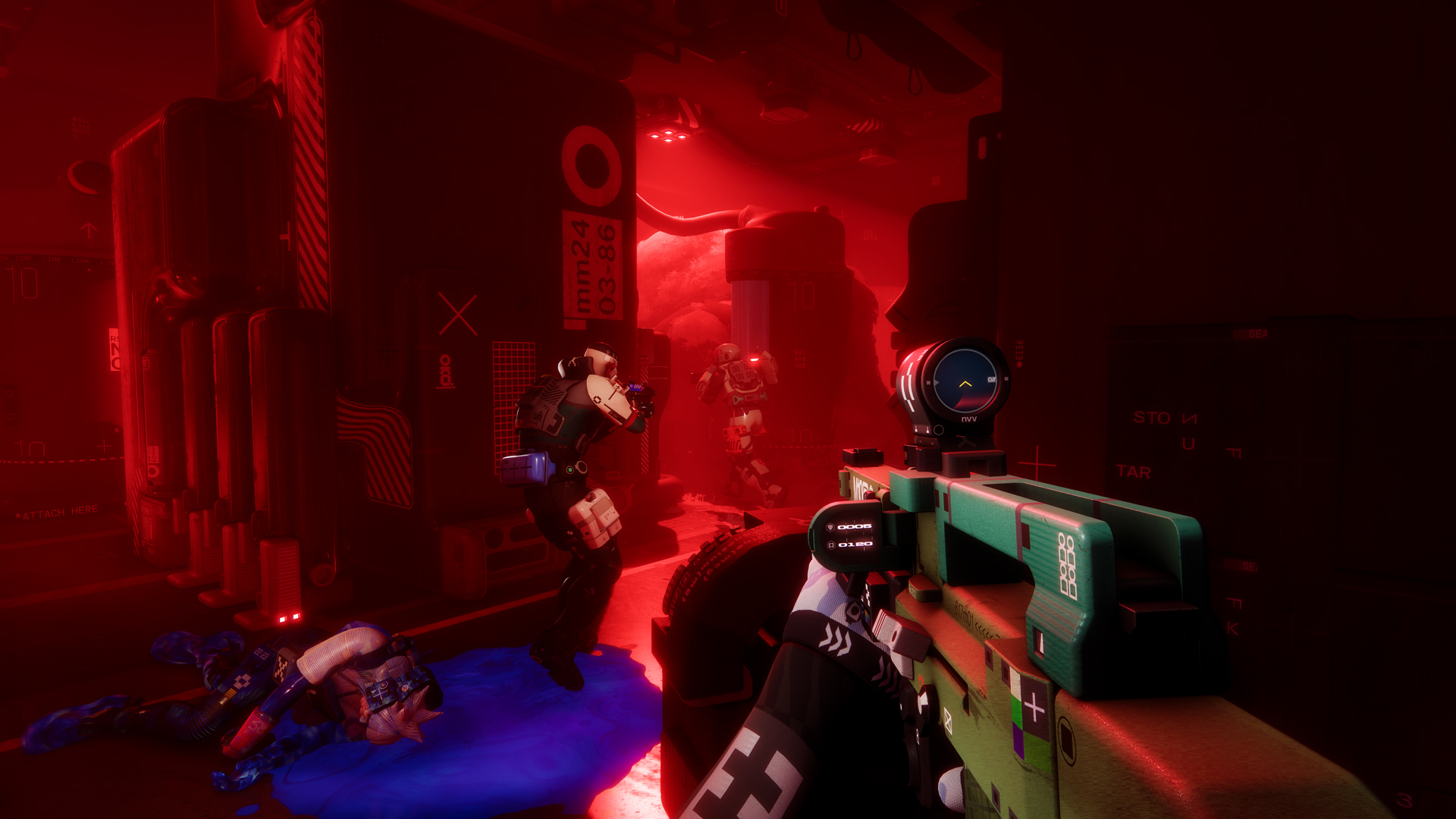
The use of harsh lighting and cramped, claustrophobic spaces makes a lot of the game’s Points of Interest into the most cinematic hallways you’ve ever been gunned down in.
When you queue up for a Trios match, things can be as lighthearted or as white-knuckle serious as you want them to be. Playing solo means you are constantly - constantly - two to three seconds away from being put into an early grave. In turn, this makes every solo match more profoundly distressing than just about any horror game I’ve ever played through. Getting jump-scared by Nemesis in a Resident Evil game doesn’t hold a behatted candle to hearing a set of rapid-patter footsteps directly above you.
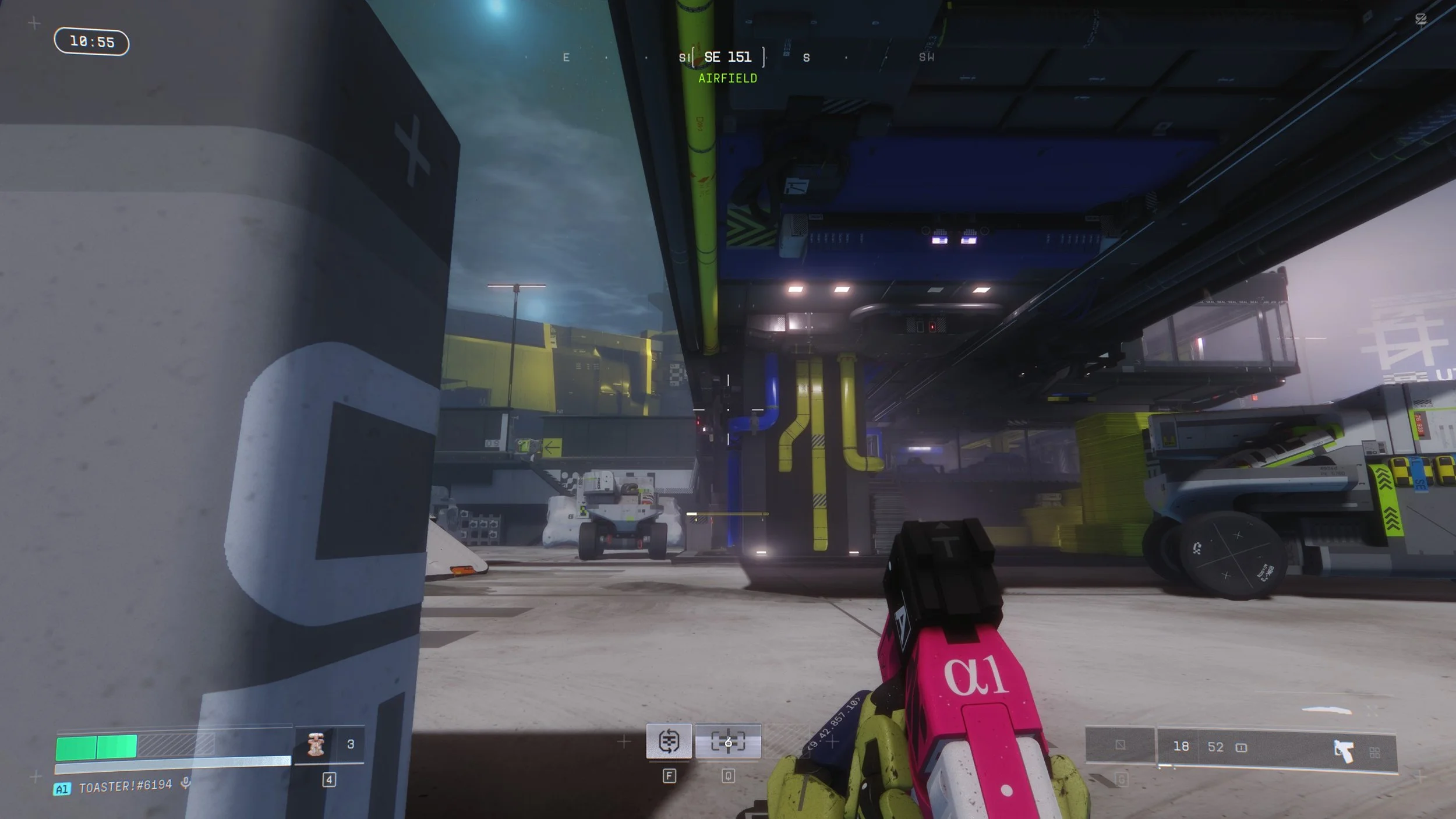
Did they hear the steps you were just making? Are they just here for some contract, and if you hide in a corner, will you survive to see the next exfil? Are you swapping to your knife and going in, or just making a break for it because good grief, has this been a profitable run, and you’re not willing to throw all of these Drinkable Cheeseburgers down the drain for the sake of another kill?
Often, the answer to that last question is no, and that’s totally fine! The shift from stealth to brutal, back-alley knife fights, and the frequency with which players oscillate between the two means that the feel and pace of runs varies wildly. Sometimes, though…you’re gonna brandish that knife, and let me tell you: I don’t know that the thrill of winning that fight is ever going to get old.
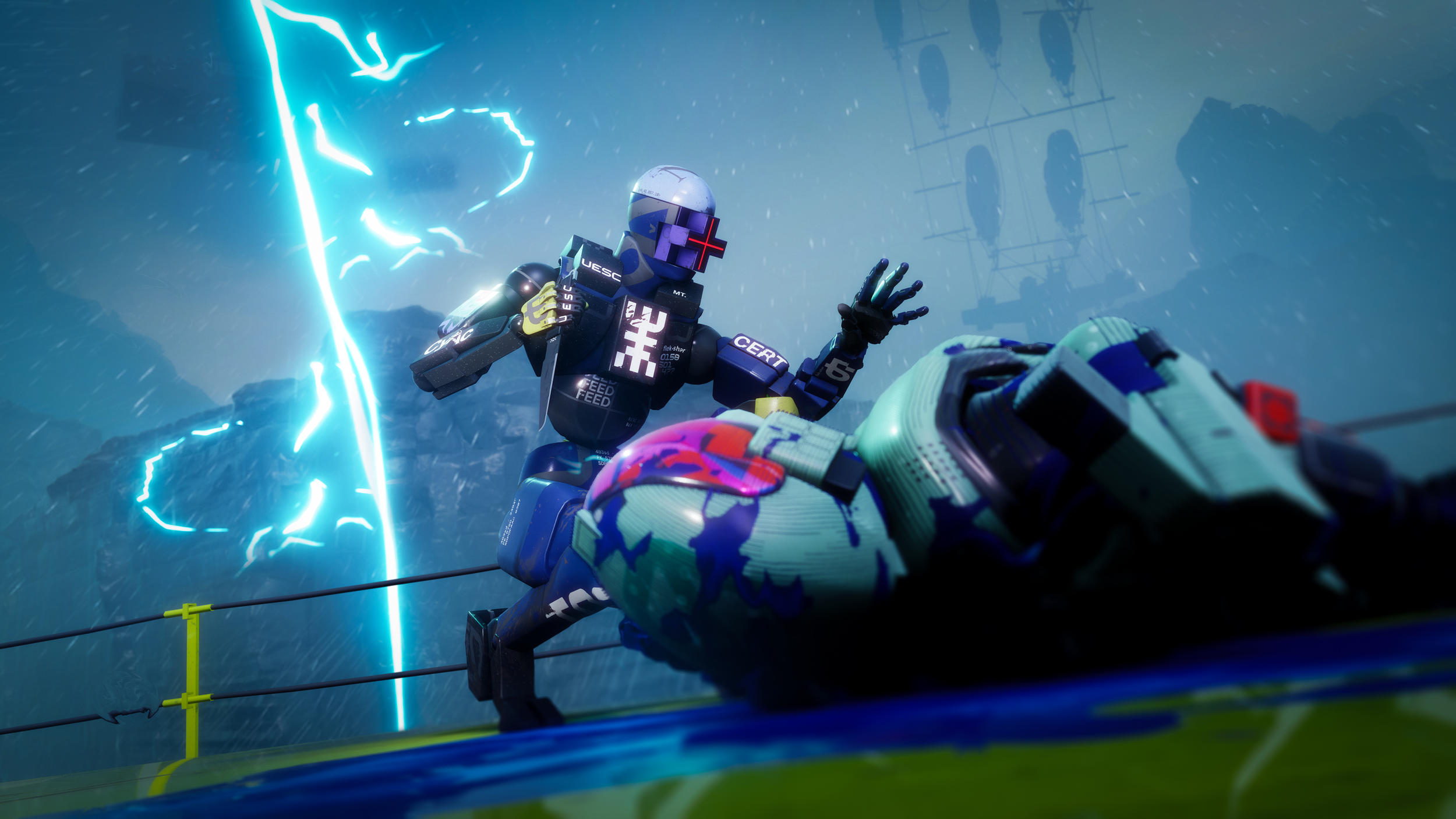
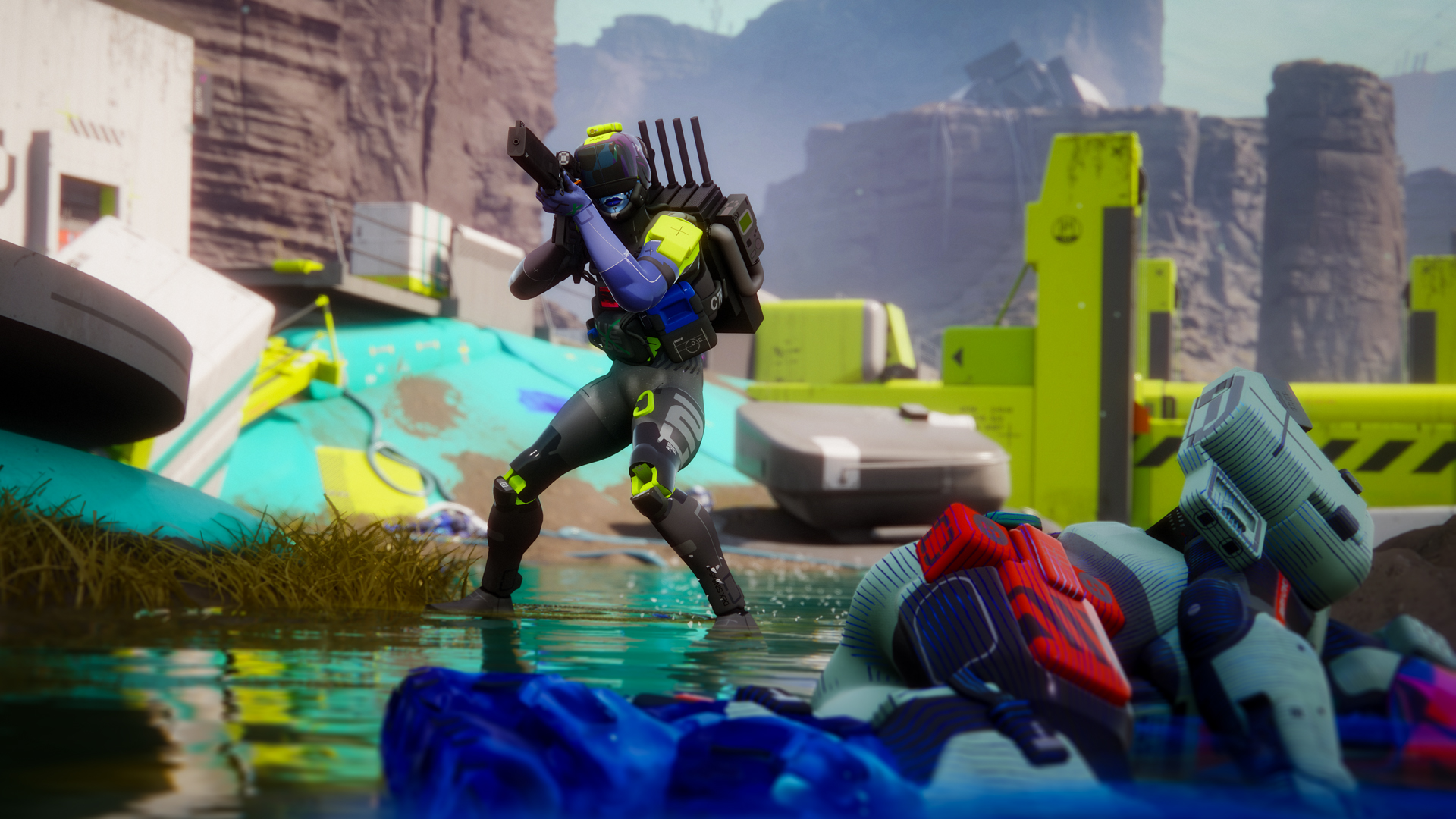
The Rook, seen here, celebrates its victory over a Destroyer shell, as the ever-present lightning storm rages in the background.
Beyond being able to play as one of the standard six Shells, solo mode also offers the Rook Shell, a kit-bashed, repurposed UESC robot that adds another brutal, maniacal twist to an already-stressful solo game. As a Rook, your abilities are limited, your stats are dog water, and your starting equipment is locked, randomized, and nothing to really crow about. If that wasn’t enough, Rooks get dropped into matches that are already in progress…trios matches, to be specific. Scavenging in this particular manner becomes less a game of equal powers vying for success and more you stealthing your way in and around roving death squads that will waste no time putting you, the lonely solo player, back in the lobby. Racking up kills as a Rook requires patience, subterfuge, and often a reckless disregard for your safety, but the second you manage to weasel your way into a 1v3 squad kill, it all feels worth it.
— —
The thing that felt like it would present the most friction for me in Marathon, and extraction shooters as a whole, was its underlying idea of impermanence. The hard-scavenged and hard-won spoils of firefights are all a run or a seasonal reset away from disappearing forever. The submachine gun you’ve managed to keep your hands on through six runs and more than a few lucky scrapes will, eventually, not be yours anymore. It can be pretty disheartening, but I think the ways in which Marathon is structured to alleviate the “gear fear” are maybe its biggest success from a structural standpoint.
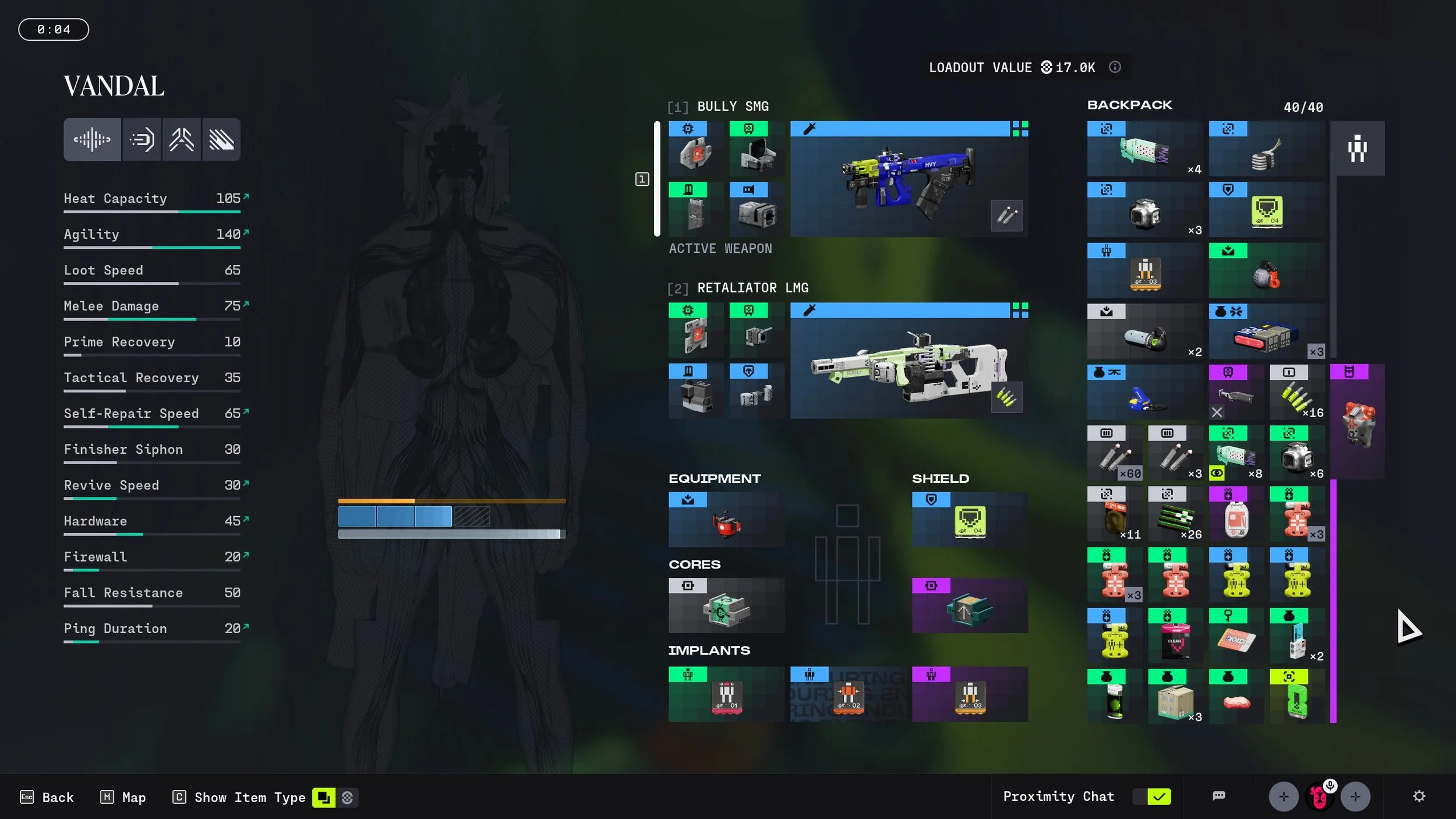
It’s a lot of stuff! I don’t want to lose it all. (it’s okay. you’re gonna lose it.)
As you work through a season, you’ll complete contracts that advance your reputation with six warring corporations, ranging from the anarchic MIDA and the ritualistic murder cult of Arachne to the “space McDonald’s” consumer products megacorp NuCaloric. These range from simple, fairly generic things like “break a bunch of windows” or “loot this type of item and get it out,” to more involved contracts that move the narrative forward while asking you to gallivant across the maps in search of answers, equipment, and other Runners. You’ll learn more about the reasons they’re invested in finding out what happened to the colony on Tau Ceti IV and the colony ship still floating above it, but more importantly, you’ll be earning proper meta-progression upgrades in the form of better stats, increased access to equipment purchases, and a steady drip of free items that can be claimed daily. Additionally, a basic “sponsored kit” with barebones equipment is always available for free, meaning you’re never going into a run completely empty.
It’s a subtle but very important smoothing to the inherently sandpapery curve of a game like this. It lowers the risk and the mental block of just jamming matches with the sponsored kits, turning most matches into low-stakes, one-life deathmatches while offering the chance to transmute a zero credit investment into a full kit you swiped off some unfortunate player you got the drop on.
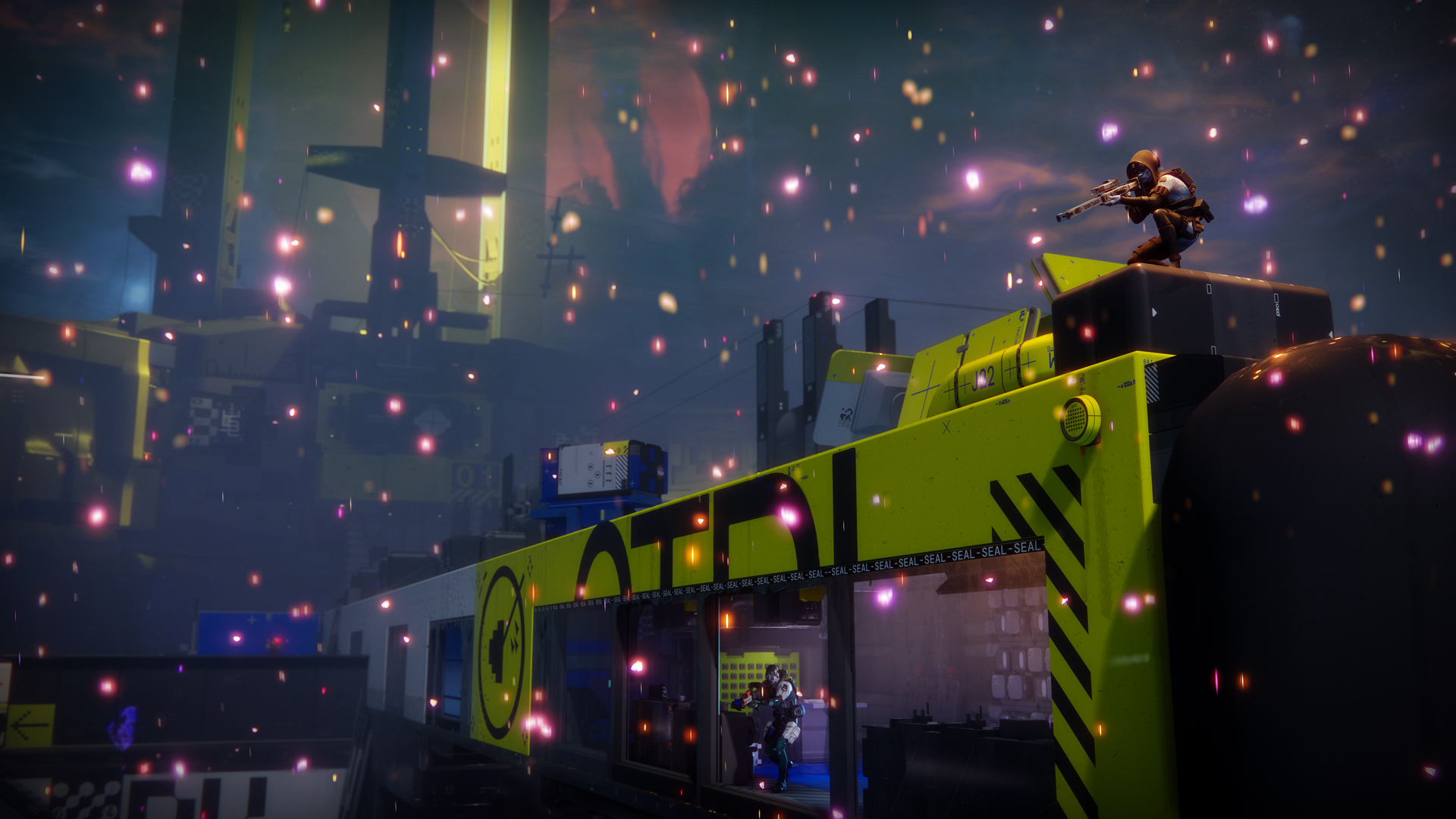
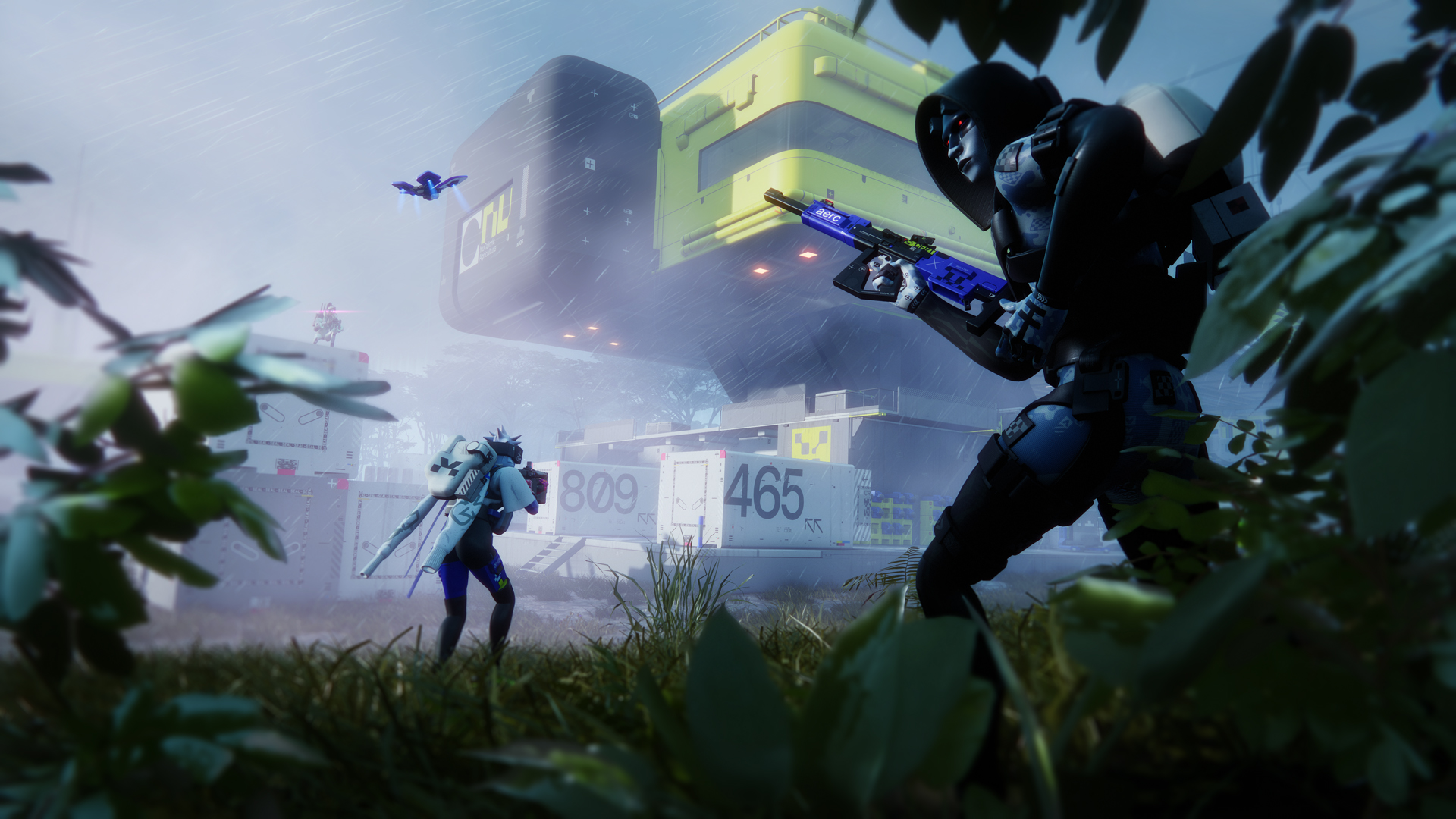
Outpost, the game’s third map, features an occasional weather event in the form of…superheated iron rain.
A Note on Cryo Archive:
As of this writing, the first weekend of availability for Marathon’s “endgame” map, Cryo Archive, has concluded. I had time for maybe four or five attempts, only two of which led to successful extractions. I can’t speak to the map with any level of real authority, but it seems like the right kind of polarizing, high-difficulty content I’ve come to expect from Bungie. Taking place aboard the colony ship the game’s named after, players are caught in tight, maze-like corridors and dealing with wave after wave of UESC robots, trying to level up map-and-run-specific security clearances. There’s a bit more of an overt “PvE” element to Cryo Archive, with the central area serving as a wide-open killbox for teams to blow each other up in. I look forward to spending more time here, but the weekend-only restriction means it’s going to happen at a much less frequent pace than looping through the game’s three main maps.
Marathon has already provided a handful of moments that will live in my brain for a very long time.
There’s the squad game where we were forced into hunkering down in a laboratory after an opposing team opens fire, when myself and another squadmate go down and our third shotgun blasts his way through the enemy team and a second enemy team, before getting us up and carrying us to the exit.
There’s the solo match on Outpost, the game’s third and most involved non-endgame map, where I stumbled into an early kill, which took me from a basic sponsored kit to a more-than-doubled inventory size and a key for some of the most loot-dense areas in the map, wherein I defended myself with a knife in a sterile white room and emerged with 15,000 credits worth of valuables.
There’s the arduous, melancholy saga of trying to get a squadmate’s quest done, searching for Sparkleaf across Dire Marsh, getting blasted and sniped at every conceivable point in that quest, before finally hunkering down, playing smart and scouting out the areas we needed to, resulting in said squadmate more or less taking out four players and handing us a treasure trove of loot.
There are misplays and misdirections, lucky reloads and heart-stopping corner turns, and all of it feels like a natural extension of the game’s narrative. Tau Ceti IV is a planet that very clearly does not want you there. The corporations treat you as an expendable tool, the flora and fauna are poison, the military robots shoot, punch, and dash to kill, and almost every time you see another player, they’re opening fire on sight. Marathon is a stressful, thrilling thing, and the possibility space for where it could go seems very wide. I haven’t played anything that feels this unabashedly confident in the type of game it wants to be in a very long time, and I can only hope that it gets the runway it needs.